FedEx Sponsors MLK Day Celebration at State History, Civil Rights Museums

FedEx Corporation is supporting free admission to the Museum of Mississippi History and Mississippi Civil Rights Museum on Martin Luther King Jr. Day, January 18. The museums will also open free of charge Sunday, January 17.

“We are grateful to FedEx Corporation for their continued support of our annual Martin Luther King Jr. celebration,” said Katie Blount, director of the Mississippi Department of Archives and History. "Their generosity allows us to invite the public to safely celebrate Dr. King's life at the museums and through virtual programming."

The museums will open from 9 a.m. to 4 p.m. on Martin Luther King Jr. Day. Safety precautions at museums include requiring all visitors to wear masks and observe social distancing guidelines.

At 6 p.m. on Monday, January 18, the annual MLK Night of Culture program will livestream on the Mississippi Civil Rights Museum Facebook page. Writer and poet C. Leigh McInnis will headline the event, which includes live painting, music, and spoken word performances by local artists. This year’s theme is “I Am a Man,” a declaration of the 1968 Memphis sanitation strikers. King joined activists Rev. James Lawson, T.O. Jones, and others in support of the sanitation strike.

A new special exhibition, I AM A MAN: Civil Rights Photographs in the American South, 1960–1970, will open at the museums Saturday, January 30, 2021. It will feature a wide range of photographs capturing key events of the Civil Rights Movement across the South, including James Meredith’s integration of the University of Mississippi, the sanitation workers’ strike in Memphis, Martin Luther King’s funeral, and the Poor People’s Campaign.

At 6 p.m. on Tuesday, January 19, the New Stage Theatre production The Debate for Democracy, a conversation between Martin Luther King Jr. organizer Ella Baker, and activist Fannie Lou Hamer, will livestream on the Mississippi Civil Rights Museum Facebook page.

Dr. King’s involvement in Mississippi includes attending the funeral of NAACP state field secretary Medgar Evers in 1963, visiting Greenwood in support of Mississippi Freedom Summer in 1964, and testifying in support of the Mississippi Freedom Democratic Party (MFDP) during the 1964 Democratic National Convention.

For more information, call 601-576-6800 or visit twomississippimuseums.com.

Section

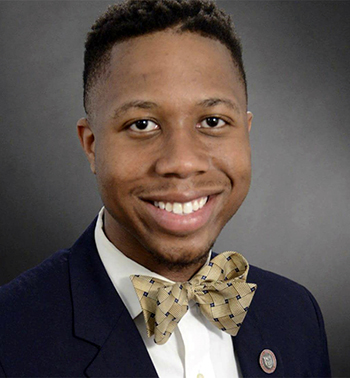
Teona Williams Named 2020 Evers Scholar

Teona Williams Named 2020 Evers Scholar

The Mississippi Department of Archives and History (MDAH) and the Medgar and Myrlie Evers Institute have named Teona Williams, a doctoral candidate at Yale University, the 2020 Medgar and Myrlie Evers Research Scholar. Williams’s research covers African American tenant farmers and civil rights activists who advocated for land cooperatives from the 1930s through the 1980s.

While at the Mississippi state archives, Williams will use the papers of Medgar and Myrlie Evers to understand how the NAACP advocated for black sharecroppers across the Delta, materials on the Republic of New Africa (RNA), Emergency Land Fund ephemera, and the Tougaloo College Civil Rights Collection.

“I eagerly await the opportunity to explore the Jackson Advocate and other associated material of the RNA to document the multiple strands of land ideology that sprouted out of black nationalists movements,” said Williams. “I am excited to explore the Medgar Evers papers to understand how the NAACP advocated for black sharecroppers across the Delta.”

Williams graduated with a BA in environmental studies and history from Bowdoin College. She holds an MA from the University of Michigan, and she is currently at work on a PhD in the Department of History at Yale University. Her dissertation follows the wide network of Delta farmers and civil rights activists and their collective struggle to establish land cooperatives.

Williams will use the $4,000 award to cover travel, housing, and other expenses while doing primary research at MDAH.

“We’re delighted to partner with the Evers Institute on this scholarship,” said David Pilcher, director of the MDAH Archives and Record Services Division. “Our goal is to facilitate new and exciting research using the tremendous resources here at the state archives.”

The Medgar and Myrlie Evers Research Scholars Program, a collaboration between MDAH and the Medgar and Myrlie Evers Institute, encourages work in the history of civil and human rights using the state archives’ holdings to publish original research.

The Evers Papers may be accessed at the William F. Winter Archives and History Building in Jackson. For more information on the Evers Scholar program or about the Evers Papers, contact Laura Heller at lheller@mdah.ms.gov.

Categories

Applications Open for Evers Scholarship

The Mississippi Department of Archives and History is accepting applications for the 2020 Medgar and Myrlie Evers Research Scholars Program, which supports the use of primary resources documenting the Civil Rights Movement at the state archives in Jackson. This competitive scholarship of $4,000 is for research at MDAH during summer 2020 and covers travel, housing, and other expenses.

The Evers Scholar program is co-sponsored by the Medgar and Myrlie Evers Institute and the Mississippi Department of Archives and History. The application form is available for download here, and the deadline to receive applications is March 27.

“We’re delighted to partner with the Evers Institute on this scholarship," said David Pilcher, director of MDAH Archives and Record Services. “Our goal is to facilitate new and exciting research using the tremendous resources here at the state archives.”

Medgar Evers was state field secretary for the NAACP in Mississippi from 1954 until his assassination in 1963. Myrlie Evers, his widow, was also a civil rights activist and served as chair of the NAACP board of directors from 1995 to 1998.

The Medgar Wiley and Myrlie Beasley Evers Papers at MDAH include Evers and Beasley family papers dating from the early 1900s to around July 1964, when Myrlie Evers and her children moved to Claremont, California. The papers are divided into four subgroups: the papers of Medgar Evers as Mississippi field secretary of the NAACP; family papers of Medgar Evers; family papers of Myrlie Evers; and records relating to the case of the State of Mississippi v. Byron De La Beckwith.

The Evers Papers may be accessed at the William F. Winter Archives and History Building, 200 North Street, Jackson. For more information on the Evers Scholar program, contact Laura Heller at 601-576-6850 or by email at lheller@mdah.ms.gov.

Panelists To Reflect on Civil Rights Museum

On Thursday, November 21, at 6 p.m. individuals who are featured in the Mississippi Civil Rights Museum’s eighth gallery will reflect on the two years since the museum opened alongside the Museum of Mississippi History. The program, the final edition of the museum's 2019 Under the Light series, will take place in This Little Light of Mine gallery and there is no charge to attend.

Panelists include Murrah High School senior Maisie Brown, singer and song-writer Pam Confer, community activist Vernon Hartley, and MDAH Programs and Communication director William “Brother” Rogers. Two Mississippi Museums director Pamela D.C. Junior will moderate the discussion.

The museum’s eighth gallery is named after Martin Luther King Jr.’s 1967 book Where Do We Go from Here: Chaos or Community?—the last book King wrote before he was assassinated. The gallery invites visitors to share their thoughts about their visit to the museum.

Under the Light references the large light sculpture in the museum’s central gallery, which honors veterans of the Civil Rights Movement in Mississippi. Activists are celebrated with words and images, and the music of the Movement emanates from the structure. The Under the Light series takes visitors on a deep dive into each of its eight galleries.

The program is free and open to the public. For more information, call 601-576-6800 or email info@mscivilrightsmuseum.com. The museums are located at 222 North Street, Jackson, MS 39201.

The Mississippi Civil Rights Museum, which opened alongside the Museum of Mississippi History in December 2017 in celebration of the state's bicentennial, explores the period from 1945 to 1976, when Mississippi was ground zero for the Civil Rights Movement nationally. The museums are open Tuesday through Saturday from 9 a.m. to 5 p.m. and Sunday from 1 to 5 p.m.

Pamela N. Walker Named 2019 Evers Scholar

Pamela Nicole Walker, a doctoral candidate at Rutgers University, has been named the 2019 Medgar and Myrlie Evers Research Scholar. Walker’s research covers a Civil Rights-era letter-writing project that connected black Mississippians with supportive white northern families.

While at the Mississippi state archives, Walker will use the papers of Medgar Evers from his work in Bolivar County and other parts of the Mississippi Delta, and the correspondence of Myrlie Evers, to provide historical context for the creation of the Mississippi Box Project.

“A family-to-family postal benevolence initiative, the Mississippi Box Project was designed to alleviate poverty, provide racially isolated northern white women the opportunity to assist in the southern movement, and forge trans-regional friendship between black and white mothers,” said Walker. “By examining letter correspondence between rural black women and white women, I will demonstrate the ways in which everyday women imagined themselves as participants in the Civil Rights Movement.”

Walker graduated with a BA in history and journalism from the University of Tennessee. She holds a MA in history from the University of New Orleans, and she is currently at work on a PhD in the Department of History at Rutgers University. Her working dissertation, “‘Everyone Must Think We Really Need Freedom’: Black and White Mothers, The Mississippi Box Project, and the Civil Rights Movement,” examines the relationship between rural motherhood, activism, poverty, and political consciousness in social movements during the 1960s.

Walker will use the $4,000 award to cover travel, housing, and other expenses while doing primary research at the Mississippi Department of Archives and History (MDAH) during the month of July. She plans to explore the Medgar Wiley and Myrlie Beasley Evers Papers, 1900–1994; the Mississippi Council on Human Relations records, 1960–1980; and the Mississippi Freedom Summer Project collection, 1962–1964.

“We’re delighted to partner with the Evers Institute and the Kellogg Foundation on this scholarship,” said David Pilcher, director of the MDAH Archives and Record Services Division. “Our goal is to facilitate new and exciting research using the tremendous resources here at the state archives.”

The Medgar and Myrlie Evers Research Scholars Program, a collaboration between MDAH and the Medgar and Myrlie Evers Institute supported by the W.K. Kellogg Foundation, encourages work in the history of civil and human rights using the state archives’ holdings to publish original research.

The Evers Papers may be accessed at the William F. Winter Archives and History Building in Jackson. For more information on the Evers Scholar program or about the Evers Papers, contact Laura Heller at 601-576-6850 or by email at lheller@mdah.ms.gov.

Grant, Reconstruction, and Civil Rights

On Tuesday, February 26, former Rhode Island Supreme Court Chief Justice Frank Williams will present “Ulysses S. Grant, Reconstruction, and Civil Rights” at the Old Capitol Museum.

“For many Americans, Reconstruction is remembered as a period of racial anarchy, political failure, and the ‘humiliation’ of the defeated South,” said Williams. “Reconstruction should not be seen as bad policy doomed by corruption and incompetence but as a profoundly forward-looking program that was subverted by violence and an inept administration.”

Williams is the longtime president of the Ulysses S. Grant Association and was instrumental in the creation of the Ulysses S. Grant Presidential Library at Mississippi State University. In 2017, Williams and his wife Virginia donated to the library their collection of documents, books, artifacts, paintings, statuary, and ephemera related to the life of Abraham Lincoln.

“Grant was running a race against time—not only in regard to white Southerners who had been displaced from power , but also the flash flood of his cronies whom he had trusted,” said Williams. “Yet Grant did yeoman’s service to Lincoln’s dream in suggesting justice in an open society.”

A reception will begin at 5 p.m. and the lecture will start at 6 p.m. in the historic House of Representatives Chamber on the second floor. Free, for more information call 601-576-6998 or email info@mdah.ms.gov.

The program is organized in association with the Ulysses S. Grant Presidential Library at Mississippi State University and co-sponsored by the Mississippi Humanities Council.

2018 Evers Research Scholar Chosen

Telisha Dionne Bailey, a post-doctoral teaching fellow at the University of Virginia, has been named the 2018 Medgar and Myrlie Evers Research Scholar. Bailey’s research examines the complex and often overlooked history of the imprisonment of African American women in Mississippi between 1890 and 1980.

While at the Mississippi state archives, Bailey will work in the papers of Medgar Evers from his time as field secretary for the NAACP to develop a clearer understanding of Evers’s involvement in the Freedom Rides in Mississippi.

“I would especially like to discover whether the organization did anything to aid incarcerated female Freedom Riders,” Bailey said. “While at the archives I’ll also research clemency and pardon requests for African American women and complaints against law enforcement from civil rights workers.”

Bailey is in the middle of a two-year post-doctoral research and teaching fellowship at the Carter G. Woodson Institute for African-American and African Studies at the University of Virginia. She holds a bachelor’s from Reinhardt University in Waleska, Georgia, and a master’s and doctorate in U.S. history from the University of Mississippi. While at the University of Mississippi, Bailey organized the inaugural Biennial Conference on Rethinking Mass Incarceration in the South, won the Georgia Nix Miller Women’s Activism Award from the Sarah Isom Center, and was a William Winter Student Scholar at the William Winter Institute for Racial Reconciliation.

Bailey’s manuscript is titled “’Please Don’t Forget About Me’: African American Women, Mass Incarceration, and the Business of Black Women’s Bodies in Mississippi’s Parchman Penal Farm, 1890-1980.” The manuscript was developed from her dissertation, which won the Mississippi Historical Society’s Riley Prize.

Bailey will use the $4,000 award to cover travel, housing, and other expenses while doing primary research at the state archives during the month of June.

“We’re delighted to partner with the Evers Institute and the Kellogg Foundation on this scholarship,” said David Pilcher, director of the MDAH Archives and Record Services Division. “Our goal is to facilitate new and exciting research using the tremendous resources here at the state archives.”

The Medgar and Myrlie Evers Research Scholars Program, a collaboration between MDAH and the Medgar and Myrlie Evers Institute supported by the W.K. Kellogg Foundation, encourages work in the history of civil and human rights using the state archives’ holdings to publish original research.

The Evers Papers may be accessed at the William F. Winter Archives and History Building, 200 North Street, Jackson. For more information on the Evers Scholar program or about the Evers Papers, contact Laura Heller at 601-576-6850 or by email at lheller@mdah.ms.gov.


State History, Civil Rights Museums Open

The Museum of Mississippi History and the Mississippi Civil Rights Museum, interconnected museums that take visitors through the sweep of Mississippi history and the state’s role as ground zero in the U.S. Civil Rights Movement, opened in Jackson on December 9, culminating the state Bicentennial Celebration.

After participating in the red ribbon cutting line in front of the museums, civil rights leader Myrlie Evers, former Gov. William Winter, and Gov. Phil Bryant led a group of children through the front doors as the first official visitors.

“Inside these walls will be exhibited Mississippi’s unique story, both the illustrious history and deep failure,” Gov. Bryant told the crowd that packed Entergy Plaza in front of the museum complex. “There is no question that Mississippi has had its portion of trials and tribulations, epic struggles that cannot be forgotten or excused, but also a rich history that should be celebrated and honored by all of us collectively.”

President Donald Trump toured the Civil Rights Museum at the invitation of Gov. Bryant. The President then spoke to a group of civil rights leaders, public officials and invited guests at a private event before the grand opening.

The Mississippi Civil Rights Museum includes the papers and artifacts of slain civil rights leader Medgar Evers, the doors of the Bryant Grocery that 14-year-old Emmett Till walked through before his fateful encounter with the shopkeeper that led to his murder; a series of lighted columns that display the name of every known lynching victim in the state—more than 600 individuals; and a dramatic two-story “This Little Light of Mine” sculpture that celebrates the hope of the Civil Rights Movement in song and lights.

“We must learn from our history to understand ourselves,” Mrylie Evers, who was instrumental in the development of the Civil Rights Museum, told the crowd. “We must learn the stories of Native Americans, African Americans, women and children and all those who have been given a voice inside these museums.”

The Museum of Mississippi History’s theme—One Mississippi, Many Stories—runs throughout galleries that include a 500-year-old Native American dugout canoe discovered submerged in mud on the bank of a Mississippi lake, author Eudora Welty’s manual typewriter and a recreated Delta juke joint that hops to the sounds of Muddy Waters, Howlin’ Wolf, and Bo Diddley.

Former Gov. Winter, a key official involved in the creation of the museums, said the exhibits represent “not one narrative, but all our stories woven together. The fascinating and complex, tragic and inspiring – all are captured here in these museums.”

Mississippi’s former history museum was closed after Hurricane Katrina ripped apart its roof in 2005. The two new museums expand the way the state’s history is presented, from prehistoric times to the Civil Rights Movement and beyond. Both museums use Mississippi’s rich tradition of storytelling to showcase the compelling lives of ordinary people who made extraordinary contributions to the state and the nation. The Mississippi Civil Rights Museum is the only state-operated civil rights museum in the nation.

The Mississippi Legislature provided $90 million for the museums. Another $19 million has been raised through private donations for exhibits and endowments. The two museums share a lobby, auditorium, classroom, collection storage, and exhibit workshop for a facility that covers a total of 200,000 square feet—the equivalent of three and a half football fields.

Private donors have created an endowment aimed at bringing every ninth-grade student in the state to visit the museums every year. At today’s opening, the W. K. Kellogg Foundation announced it would match the $1 million it has already contributed to the endowment.

“We envision future generations will be inspired by the authentic narratives in these extraordinary exhibits,” La June Montgomery Tabron, president and CEO of the foundation, said in the opening ceremonies.

“These museums have had the support of an extraordinary coalition of people, including five governors, legislators from across the political spectrum, corporations, foundations and hundreds of individuals from across Mississippi whose voices have contributed to the stories we are telling,” said Katie Blount, director of the Mississippi Department of Archives and History, which operates the two new museums.

Bobby J. Smith II Named 2017 Evers Scholar

A doctoral student from Cornell University has been named the 2017 Medgar and Myrlie Evers Research Scholar. Bobby J. Smith II will explore the relationship between the politics of food, race, and activism using the holdings of the Mississippi Department of Archives and History.

“Bobby’s research focuses on the historical antecedents of contemporary ideas about food justice and food sovereignty,” said Cornell University associate professor of history Lori Leonard, “His starting point is the iconic Greenwood Food Blockade, which is a prominent example of how food—and control over access to food—mattered to movement politics.”

In October 1962, the Leflore County board of supervisors voted to discontinue the USDA’s federal commodity program, which provided corn meal, rice, flour, and sugar free of charge each month to more than 20,000 African American residents. In response, the nascent Student Nonviolent Coordinating Committee organized a national food drive, which also gave them direct access to black residents of Leflore County for a voter registration campaign. In spring of 1963, the supervisors reinstituted the commodities program.

“My goal is to reveal unexplored aspects of movement politics,” said Smith. “My project departs from the traditional line of civil rights inquiry and investigates the Greenwood Food Blockade with a focus on how food was a weapon of opposition and a tool of resistance in the civil rights era.”

Smith graduated summa cum laude with a BS degree in agricultural economics from Prairie View A&M University. He holds an MS in agricultural economics from Cornell University, where he is at work on a PhD in the Department of Developmental Sociology. Smith will use the $4,000 award to cover travel, housing, and other expenses while doing primary research at the state archives during June and July. He plans to focus initially on the Citizens’ Council (Miss.) collection, 1954-1956; the Medgar Wiley and Myrlie Beasley Evers Papers, 1900-1994; and the Fannie Lou Townsend Hamer collection, 1967-2001.

“We’re delighted to partner with the Evers Institute and the Kellogg Foundation on this scholarship,” said David Pilcher, director of the MDAH Archives and Record Services Division. “Our goal is to facilitate new and exciting research using the tremendous resources here at the state archives.”

The Medgar and Myrlie Evers Research Scholars Program, a collaboration between MDAH and the Medgar and Myrlie Evers Institute supported by the W.K. Kellogg Foundation, encourages work in the history of civil and human rights using the state archives’ holdings to publish original research.

The Evers Papers may be accessed at the William F. Winter Archives and History Building, 200 North Street, Jackson. For more information on the Evers Scholar program or about the Evers Papers, contact Laura Heller at 601-576-6850 or by email at lheller@mdah.ms.gov.

Applications Being Accepted for Evers Scholar

The Mississippi Department of Archives and History is accepting applications for the 2017 Medgar and Myrlie Evers Research Scholars Program, which supports the use of primary resources documenting the Civil Rights Movement at the state archives in Jackson. This competitive scholarship of $4,000 is for research at MDAH during summer 2017 and covers travel, housing, and other expenses.

The Evers Scholar program is co-sponsored by the Medgar and Myrlie Evers Institute and the Mississippi Department of Archives and History, with support from the W.K. Kellogg Foundation. The application form is available for download here, and the deadline to receive applications is March 24.

“We’re delighted to partner with the Evers Institute and the Kellogg Foundation on this scholarship," said David Pilcher, director of the MDAH Archives and Record Services Division. “Our goal is to facilitate new and exciting research using the tremendous resources here at the state archives.”

Medgar Evers was state field secretary for the NAACP in Mississippi from 1954 until his assassination in 1963. Myrlie Evers, his widow, was also a civil rights activist and served as chair of the NAACP board of directors from 1995 to 1998.

The Medgar Wiley and Myrlie Beasley Evers Papers at MDAH include Evers and Beasley family papers dating from the early 1900s to around July 1964, when Myrlie Evers and her children moved to Claremont, California. The papers are divided into four subgroups: the papers of Medgar Evers as Mississippi field secretary of the NAACP; family papers of Medgar Evers; family papers of Myrlie Evers; and records relating to the case of the State of Mississippi v. Byron De La Beckwith.

The Evers Papers may be accessed at the William F. Winter Archives and History Building, 200 North Street, Jackson. For more information on the Evers Scholar program, contact Laura Heller at 601-576-6850 or by email at lheller@mdah.ms.gov.