MDAH Calls on Public to Share Rosenwald Artifacts
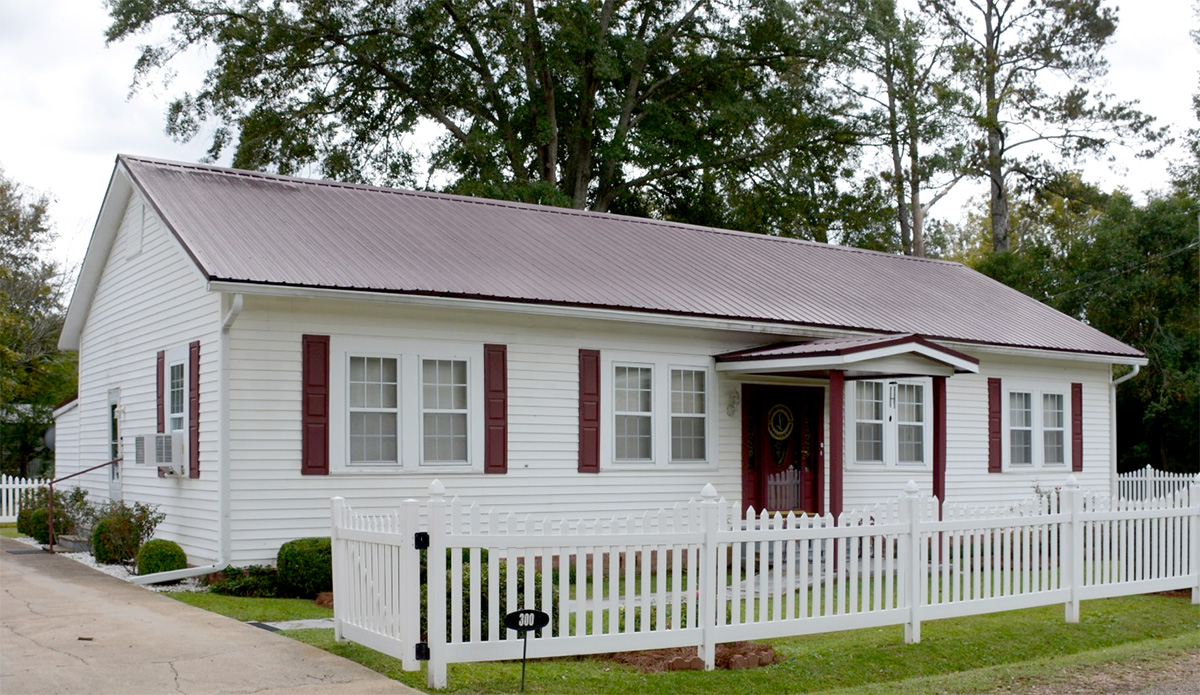
Objects from schools that once served Black students
will be considered for 2027 exhibit.
In preparation for an August 2027 temporary exhibit, curators with the Mississippi Department of Archives and History are calling on the public to share their artifacts from Rosenwald Schools that opened a century ago to serve Black students.
Rosenwald Schools are named for Julius Rosenwald, a millionaire philanthropist who was president and part owner of Sears, Roebuck and Company. He was inspired by and partnered with Booker T. Washington to fund schools for Black children across the South, beginning with six in Alabama that opened in or between 1913-1914. There were 4,978 total Rosenwald schools. In Mississippi, there were more than 500 schools, second in number to North Carolina.
MDAH is calling on residents to search through their attics, closets and trunks for precious objects associated with the Rosenwald schools in Mississippi. The artifacts could take any form – a teacher’s log, teaching license, photos, desks, chalkboards, textbooks or even cafeteria trays.
“Behind every artifact is a human story. Through these everyday school objects, we hope to bring to life the experiences of the students, teachers and communities whose lives were transformed by Rosenwald Schools,” said Ivette Ray, director of curatorial services within the MDAH Museum Division.
These items will be considered for an MDAH exhibit that will open in August alongside the traveling photography exhibit, “A Better Life for Their Children: Photographs and Stories by Andrew Feiler.”
People are asked to send a description and photo of their objects to info@mdah.ms.gov.
Background on Schools in Mississippi
According to a “Mississippi History Now” article by former MDAH architectural historian Jennifer Baughn, public schooling in Mississippi did not become commonplace until after the Civil War.
When the United States Supreme Court decided in its 1896 Plessy v. Ferguson ruling that states could require separate public facilities for Black and White people as long as they were equal (the so-called “separate but equal” doctrine), White-dominated school boards began concentrating on funding schools for White children, rather than for Black. By the early 1900s, while many White children studied their textbooks in new functional buildings, Black students were often left to make do in churches, lodges, and poorly constructed buildings.

Beginning in the 1910s, however, new school buildings for Black students began to spring up on the Mississippi landscape as Rosenwald partnered with mostly Black communities. The last school was built in 1937.
In 2002, the National Trust for Historic Preservation placed Rosenwald Schools on its 11 Most Endangered Historic Places list, and in 2011 the Trust included the schools in its portfolio of National Treasures – nationally significant but threatened historic treasures.
In February 2026, the Terry Rosenwald School in Hinds County, which was established as the "Colored Public School of Terry," was listed in the National Register of Historic Places. The school building on this site is documented as “Terry School” on a school card in the records of the Julius Rosenwald Fund Collection at Fisk University.
Mississippi is believed to be among only a few states to have completed as comprehensive a survey of Rosenwald schools or historic schools in general.
Only a few Rosenwald buildings are known to survive in Mississippi: Bay Springs School, Forrest County (1925); Brushy Creek School, Copiah County (ca. 1930); Bynum School, Panola County (1926); Coahoma Agricultural High School (ca. 1930; now Coahoma Community College); Drew School, Sunflower County (1929); Hollandale School, Washington County (1924; only a section survives, and it has been extensively altered); Marks School, Quitman County (1922); Moorhead Schoolteacher’s House, Sunflower County (1932); Nichols Elementary School, Canton, Madison County (1927); Oak Park Principal’s Home and Girls’ Dormitory, Laurel, Jones County (1928); Pantherburn School, Sharkey County (1927; altered, now serves as a church); Pass Christian (Randolph) School, Pass Christian, Harrison County (1928); Prentiss Institute, Prentiss, Jefferson Davis County (1926); Rose Hill School, Sharkey County (1922; badly deteriorated); Sherman Line School, Amite County (1928); Swiftown School, Leflore County (1921; may not be a Rosenwald School); Walthall County Training (Ginntown) School, Walthall County (1920); John White Schoolteacher’s House, Forrest County (1925).