
History Is Lunch: Literary Enthusiasts Pay Homage to Ellen Gilchrist, ‘The Last Southern Writer’
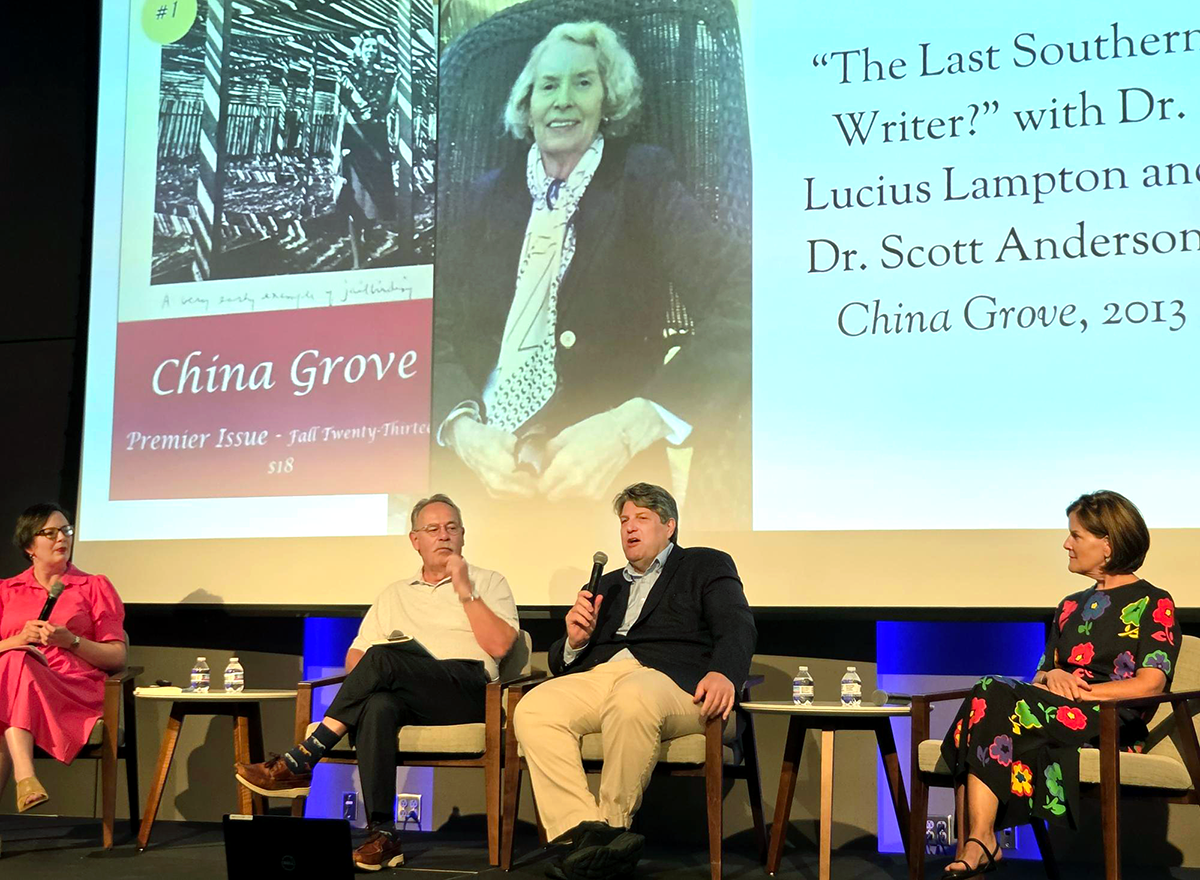
Author Tracy Carr recently moderated a lively panel discussion exploring the life, work and unmistakable voice of celebrated Mississippi author Ellen Gilchrist called “Holding Court with the Queen: Conversations with Ellen Gilchrist” during History is Lunch at the Two Mississippi Museums.
The discussion featured Carr, author of Conversations with Ellen Gilchrist, alongside China Grove Journal editors Dr. Scott Anderson and Dr. Lucius “Luke” Lampton, and Holly Lange, founder of the Mississippi Book Festival. During the discussion, Gilchrist was described as “the last Southern writer.”
Born in Vicksburg, Gilchrist drew heavily from her own experiences as she developed the characters and stories that would define her literary career. Her life was anything but conventional, and was an important part of her writing.
Gilchrist attended Vanderbilt University before transferring to the University of Alabama and later Auburn University. She eventually left college after eloping with Marshall Walker. The couple had two children before divorcing. Gilchrist later married a judge, divorced, remarried Walker and had another child before their second divorce.
Following that second divorce, Gilchrist returned to Jackson, where her parents lived, and enrolled at Millsaps College. There, she took a class taught by beloved Mississippi author Eudora Welty.
The timing was remarkable. Welty taught at Millsaps for only one semester, and it happened to be the same semester Gilchrist enrolled.
“That was kismet,” Carr said.
Gilchrist later married again and moved to New Orleans, continuing a life marked by relationships, travel, and experiences that would ultimately find their way into her fiction.
During the program, Carr shared a short clip from the television program “Post Script,” featuring Gilchrist speaking about her early attraction to reading and describing it as a “lonely thing.”
“For those who have never heard her talk before, that was a treat,” Carr said. “Not just the content, but the style. She's thinking about something, she switches to this, and she's telling a story, and it's all over the place. You can imagine how fun this was to transcribe.”
Lange recalled similar experiences during her conversations with Gilchrist through the Mississippi Book Festival’s author sessions.
“You'll see where she literally looks off to the left and kind of drifts off in thought unrelated to anything that we were talking about in the room,” Lange said.
That distinctive conversational style is captured in Carr’s book, which features 18 interviews spanning 40 years and examines Gilchrist’s life and work through the headstrong, honest and often outrageous Southern female characters for which she became known.
Carr said the interviews were drawn from a wide range of sources, including television and radio appearances, print interviews, conference proceedings and book festival recordings.
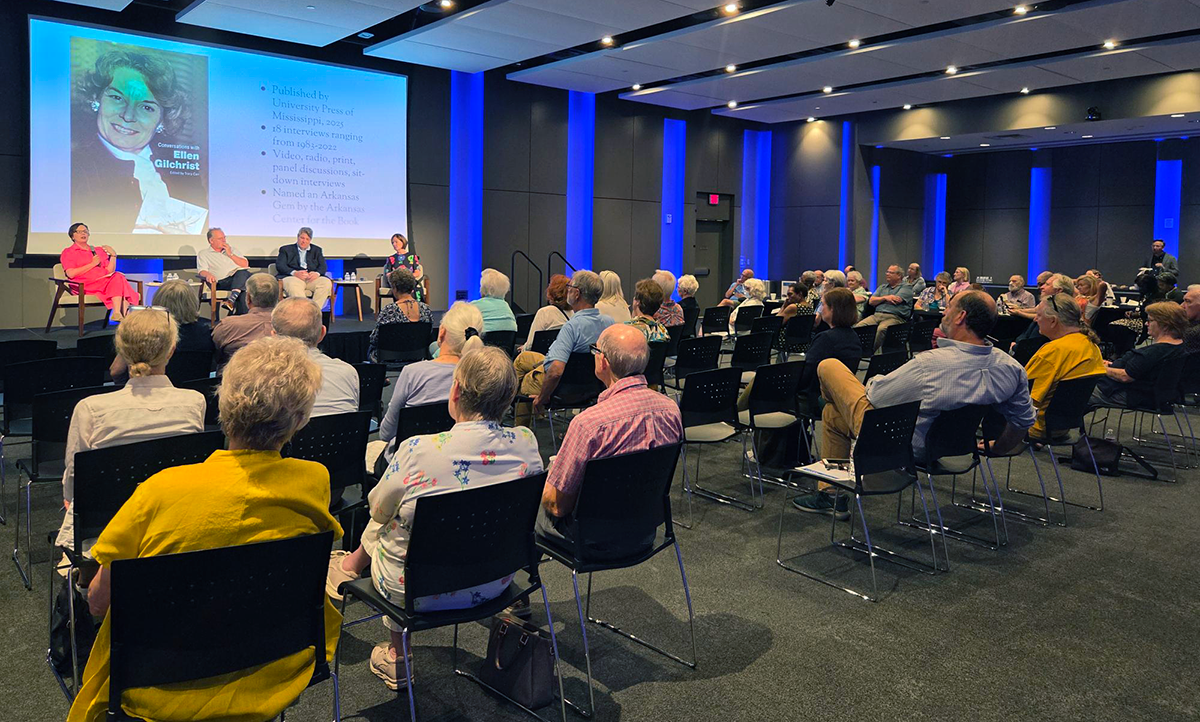
Anderson and Lampton also shared memories of their longtime relationship with Gilchrist, which began during and continued after the publication of her stories in the China Grove Journal.
“She was just a lovely person,” Anderson said, recalling the affection Gilchrist developed for him and Lampton.
One of the stories shared during the discussion highlighted Gilchrist’s connection to Welty. In one of her autobiographical essays, Gilchrist recalled meeting Welty outside the Carnegie Library while accompanied by her three red-headed children.
Gilchrist introduced the children to Welty, describing herself as tired and exasperated by the demands of motherhood. Welty responded with a question that would stay with Gilchrist: “You have three children. Why do you need to write?”
Lampton, who serves as vice president of the Board of Trustees of the Mississippi Department of Archives and History, said Gilchrist possessed a remarkable combination of brilliance and levity.
“She could do anything with a great force of intellect and also a great sense of humor,” Lampton said.
He also recalled Gilchrist’s response when panelists asked whether she agreed with comparisons made between her and other prominent Southern writers.
“She liked that comparison, but she said, ‘You know, I'm really a poet,’” Lampton said.
That observation, he said, offers an important key to understanding Gilchrist’s body of work.
“I think her entire writing career, if you look at what she's about, she said that what she figured out—to be successful as a poet—was she needed to hide the poems in her fiction,” Lampton said. “And so a lot of what she's doing in her fiction is hiding her poems.”
History Is Lunch is a weekly lecture series of the Mississippi Department of Archives and History that explores different aspects of the state's past. The hour-long programs are held in the Craig H. Neilsen Auditorium of the Museum of Mississippi History and Mississippi Civil Rights Museum building in Jackson.
For more information, call 601-576-6850 or email info@mdah.ms.gov.